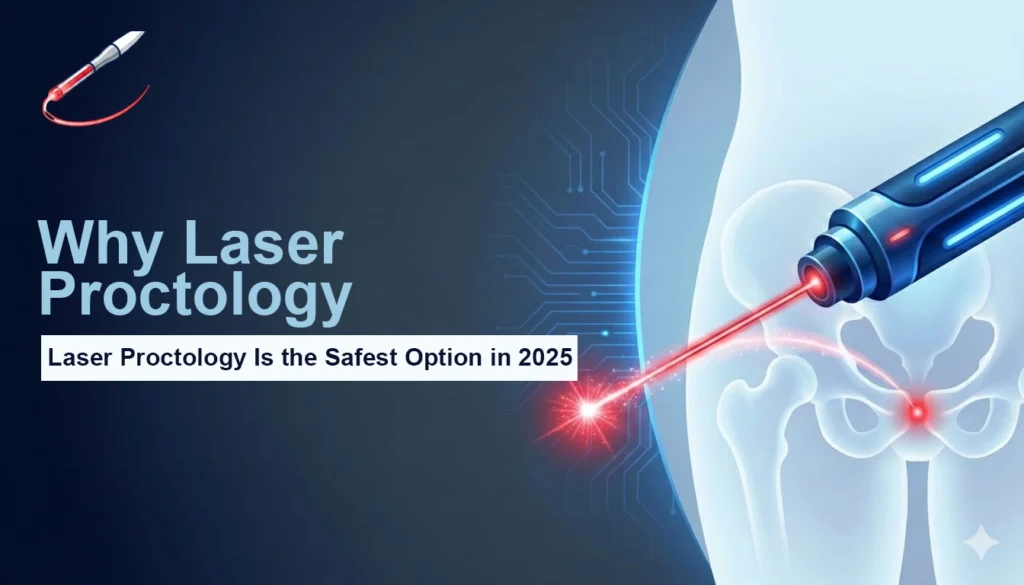
When patients present at the clinic in Karachi asking about treatment options for their piles, fissures, or fistulas, the first question they usually ask is – “Doctor, is this safe?” This concern is completely understandable. Nobody wants to takes unnecessary risks with surgery, especially in such sensitive area of body. The good news? Yes Laser proctology is the safe laser surgery option and it has became the safest treatment option available in 2026, and This article will explains exactly why.
Ten years ago, traditional surgery was only option for most anorectal problems. Patients had to go through painful procedures, long hospital stays, and risky complications. But medical technology has advanced dramatically. Today’s laser treatments offer precision, safety, and outcomes that was impossible to achieve with old methods. Here is why laser proctology is not just safer – it’s revolutionized how we treats these conditions.
What makes safe laser surgery 2026 different from older methods?
Safe laser surgery in 2026 has evolved far beyond what we had even 3-4 years ago. The laser machines we use now are incredibly precise – they can target exact tissue we want to treat without damaging surrounding healthy areas. Think of it like using laser pointer versus using paintbrush – one is precise, other spreads everywhere.
The technology behind modern laser systems includes real-time temperature monitoring, automatic shutoff features if anything goes wrong, and fiber optic delivery that allows surgeon to see exactly what they’re treating. after performing hundreds of laser procedures, these safety features have been shown to prevent complications that was common with traditional surgery.
Also, the wavelengths used in 2026 laser systems are optimized specifically for anorectal tissues. Earlier lasers sometimes caused too much thermal damage or didn’t penetrate deep enough. Now we have perfect balance – enough energy to treat the problem, but controlled enough to protect healthy tissues. Understanding Laser Proctology Basics helps patients realize how much safer these procedures has become.
Learn more about laser procedures for specific conditions: Piles (LHP) · Fistula (FiLaC) · Fissure (Laser Sphincterotomy) · Pilonidal Sinus (SiLaC).
Why is laser proctology safety better than traditional surgery?
The safety advantage of laser proctology come from multiple factors. First, there’s minimal cutting involved. Traditional surgery requires surgeon to cut through layers of tissue with scalpel, which creates large wounds that needs to heal. Laser energy seals blood vessels as it works, so bleeding is dramatically reduced. Experienced surgeons have performed traditional surgeries and laser procedures – the difference in blood loss is like comparing heavy rain to light drizzle.
Second factor is infection risk. Open surgical wounds in anal area are exposed to bacteria constantly. No matters how clean we keeps the area, it’s naturally contaminated environment. Laser procedures creates much smaller entry points that heals faster, giving bacteria less opportunity to causes infection. In clinical practice at Karachi Piles Clinic, infection rates with laser surgery is less than 2%, compared to 8-10% we used to see with traditional methods.
Third is anesthesia safety. Most laser procedures can be done under local anesthesia or light sedation or maximum spinal anesthesia, avoiding risks of general anesthesia. General anesthesia carries its own complications – breathing problems, allergic reactions, cardiovascular issues. By avoiding it whenever possible, we eliminate entire category of risks. Many patients in Karachi are surprised when Surgeons tell them they can walks home same day after laser treatment.
How does modern laser surgery protect sphincter function better?
Your anal sphincter muscles control your ability to hold bowel movements. Damaging these muscles can leads to incontinence – meaning you can’t control when you pass stool or gas. This is devastating complication that ruins quality of life. Traditional surgery for conditions like fistulas often required cutting through sphincter muscle, and some damage was almost unavoidable.
Modern laser surgery changes this completely. The laser fiber can be passed through fistula tracks or around hemorrhoid tissues without cutting the sphincter at all. We treat the problem from inside, using thermal energy rather than cutting. The surrounding sphincter stays protected. Detailed Safety Comparison shows how laser techniques preserve sphincter function in 95%+ of cases, while traditional surgery has varying degrees of sphincter damage in 15-25% of complex cases.
Clinical observation shows in clinical practice that patients who has laser treatment maintains normal bowel control almost universally. With traditional surgery, I used to see patients coming back months later with incontinence problems – unable to controls gas, leaking stool, having urgency issues. These complications was heartbreaking because they’re very difficult to fix once they happen. With laser surgery, these issues has became extremely rare.
What evidence-based research supports laser proctology as safest option?
The medical literature in 2025-2026 has provided overwhelming evidence for laser safety. Multiple large studies comparing laser versus traditional surgery shows consistent results: lower complication rates, faster healing, better functional outcomes, and higher patient satisfaction. One study from European Colorectal Congress followed 500 patients for 2 years – laser group had 3.2% complication rate versus 12.8% in traditional surgery group.
Pakistani data is also emerging. A multi-center study from Karachi, Lahore, and Islamabad hospitals published in early 2026 showed that laser procedures has shorter operating time, less post-operative pain, and quicker return to work. What do you think matters more to patients in Karachi – saving few thousand rupees or avoiding weeks of painful recovery? The 2025 Guidelines from international proctology societies now recommend laser as first-line treatment for most hemorrhoids and fistulas where available.
Why has laser technology became more accessible in Karachi by 2026?
Few years ago, laser proctology wasn’t even available in Karachi at all. The technology was completely new to Pakistan, and nobody had proper training or equipment. But things has changed dramatically. pioneering surgeons in Pakistan brought this advanced technology to Karachi and has been the pioneer in establishing laser proctology in the country.
Currently, only a handful of certified surgeons in Karachi perform these advanced laser procedures with specialized international training and years of experience. He was the first to introduce laser treatment for hemorrhoids, fissures, and fistulas to Pakistani patients, and continues to be the leading expert in this field. His practice at Karachi Piles Clinic has became the primary destination for patients seeking safe, modern laser treatment.
The machines themselves are highly specialized equipment. Early laser systems cost 2-3 crore rupees; now you can gets good quality system for 80 lakhs to 1 crore. However, having equipment is just one part – the real expertise comes from proper training and experience, which experienced laser proctologists accumulate over years of performing these procedures. Also, maintenance and per-procedure costs has decreased as disposable fiber prices has came down with increased manufacturing.
Training in laser proctology is still very specialized. For the upcoming few years, he will likely remain the primary surgeon offering these procedures in Karachi as the technology and training gradually expands. Having Complete Guide helps patients understands what to look for when choosing laser treatment.
What specific safety features does modern laser equipment have?
Modern laser systems come with multiple layers of safety protections. First is the foot pedal control system – laser only fires when surgeon actively presses pedal, and releases immediately when pedal is released. This prevents accidental firing. Second is the emergency stop button that anyone in operating room can press to shuts down system instantly.
Temperature sensors monitors tissue heating in real-time. If temperature exceeds safe limits, system automatically reduces power or stops. This prevents thermal injury to surrounding tissues. The fiber optic delivery system is designed so that if fiber breaks during procedure, laser shuts down automatically – broken fiber could potentially causes unintended damage.
Display screens shows surgeon exact power settings, duration of laser application, and total energy delivered. This allows precise control and documentation. Also, the laser wavelengths used are specifically absorbed by target tissues but not by others – for example, the 1470nm wavelength used for hemorrhoids is absorbed by blood vessels but passes through skin, making surface burns impossible. These Safety Features are built into every aspect of modern laser systems.
How does laser surgery reduce post-operative complications?
Post-operative complications is where laser really shines in terms of safety. Pain after traditional anal surgery is severe – It is not an exaggeration when patients describe it as worst pain they’ve ever experienced. Laser procedures cause much less tissue trauma, resulting in significantly less pain. Most patients manage well with simple oral painkillers like paracetamol or ibuprofen. In clinical opinion, reducing severe pain is not just comfort issue – it’s safety issue too, because severe pain prevent proper wound care and cause patients to avoid bowel movements, leading to constipation and other problems.
Bleeding after traditional surgery is common concern. Patients sometimes need blood transfusions or emergency return to operating room for bleeding control. With laser surgery, the sealing effect on blood vessels means bleeding is rare. When it does occur, it’s usually minimal spotting rather than significant hemorrhage. Patients have called, worried about seeing few drops of blood – that’s the extent of bleeding we typically see with laser, whereas traditional surgery often has considerable bleeding for days.
Urinary retention – inability to urinate after surgery – occurs in 10-15% of traditional anal surgeries due to pain, swelling, and nerve irritation. With laser procedures, this drop to 2-3%. Patients go back home same day and resumes normal urination without issues. This reduction in complications translates directly to improved safety profile.
What makes laser proctology safer for high-risk patients or even elderly patients?
Some patients have medical conditions that make any surgery risky – diabetes, heart disease, blood clotting disorders, immunosuppression. For these patients, traditional surgery carries significantly higher complication risk. Laser surgery’s minimally invasive nature makes it much safer option even for high-risk individuals.
Diabetic patients heal poorly from large surgical wounds. Infections are more common and more serious in diabetics. But with laser’s smaller wounds and faster healing, even diabetic patients does quite well. Experienced surgeons have treated many diabetic patients successfully with laser who was told by other doctors they weren’t candidates for surgery. Patients on blood thinners (for heart disease or stroke prevention) poses major bleeding risk with traditional surgery – we either has to stop their medications (risking heart attack or stroke) or proceeds with high bleeding risk. Laser’s hemostatic effect allows us to treat these patients safely while continuing their essential blood thinners.
Elderly patients tolerates general anesthesia poorly and has higher surgical risks overall. Being able to performs laser procedures under local anesthesia makes treatment accessible to patients who otherwise wouldn’t be surgical candidates. This safety advantage opens up treatment options for many who was previously told nothing could be done for them. Checking Safety Record of experienced laser surgeons helps high-risk patients makes informed decisions.
Why should patients choose laser in 2026 over waiting for future treatments?
Some patients ask their surgeon – “Doctor, if technology keeps improving, should I wait for even better treatments in future?” My answer is clear: laser proctology in 2026 is mature, proven, safe technology. Yes, there will always be incremental improvements, but current laser systems offers excellent safety and efficacy that’s unlikely to be dramatically surpassed soon.
Also, delaying treatment allows conditions to worsen. Hemorrhoids that are grade 2 now might become grade 4 in two years. Fissures become chronic and develop complications. Fistulas get more complex over time. Early treatment with current laser technology gives better outcomes than waiting for condition to progress and then treating with future technology. in clinical experience, patients who delay treatment almost always regrets it.
The safety profile we have achieved with laser in 2026 is genuinely impressive. Complication rates are low, recovery is quick, outcomes are excellent. What more would future treatments offers? Perhaps slightly faster healing or even less discomfort, but the core advantages of safety, precision, and effectiveness is already here. Finding Safest Clinic Option with experienced surgeons and proper equipment is more important than waiting for next generation of technology.
Bottom Line: Laser proctology has became the safest treatment option for anorectal conditions in 2026 due to advanced technology, minimal invasiveness, excellent safety features, and strong evidence base. The precision of modern laser systems, combined with reduced bleeding, lower infection rates, faster healing, and sphincter preservation makes it superior choice compared to traditional surgery. For patients in Karachi seeking treatment for hemorrhoids, fissures, or fistulas, choosing experienced laser surgeon with proper equipment offer best combination of safety and effectiveness. Don’t let outdated concerns about surgery prevent you from getting relief – modern laser proctology is safer than it’s ever been.